 Guest
Guest
Chapter:
1. Nowadays millions of companies produce billions of products and role of advertising is quite obvious. Ads help consumers to find goods or services of ir needs. However, do our needs grow equally fast as number of products? Some market analysts insist modern commercials are not merely matchmakers of a product and a consumer, but actively interfere with buyer’s desires, developing artificial needs.
Undoubtedly, advertisement guides people through market, serves those who do not have time to learn differences between goods. These products are probably same, but loyalty to a particular brand, formed by a commercial helps make a choice. When a person buys one mobile phone out of 50 models, he thinks he made his choice himself. But that was a commercial who told him about features of this phone.
Neverless, ads not only inform us about new goods, but force people to want m. This can be even useful, for example for someone who suffers from back pains and without commercials he would never imagine re are new mattresses which could ease ir pains.
Unfortunately, promoters now operate our minds more aggressively. Commercials no longer promote products, but lifestyles. They told us to purchase things just because y are fashionable or up to date with image of successful person. And we buy new cars, gadgets and clos in order to match this image and not because old ones are no longer usable.
What has been concluded is that high sales of popular commodities are result of new promotional technologies. The best illustration of that is that everyone now is concerned mostly about how a new mobile phone will reflect his personality, a new shirt – his image, or will a new car make colleagues feel jealous.
The word 'matchmaker' in above passage means :
Undoubtedly, advertisement guides people through market, serves those who do not have time to learn differences between goods. These products are probably same, but loyalty to a particular brand, formed by a commercial helps make a choice. When a person buys one mobile phone out of 50 models, he thinks he made his choice himself. But that was a commercial who told him about features of this phone.
Neverless, ads not only inform us about new goods, but force people to want m. This can be even useful, for example for someone who suffers from back pains and without commercials he would never imagine re are new mattresses which could ease ir pains.
Unfortunately, promoters now operate our minds more aggressively. Commercials no longer promote products, but lifestyles. They told us to purchase things just because y are fashionable or up to date with image of successful person. And we buy new cars, gadgets and clos in order to match this image and not because old ones are no longer usable.
What has been concluded is that high sales of popular commodities are result of new promotional technologies. The best illustration of that is that everyone now is concerned mostly about how a new mobile phone will reflect his personality, a new shirt – his image, or will a new car make colleagues feel jealous.
2. गाईको बाच्छो भएजस्तै हाँसको ?
3. नेपालमा पहिलो व्यक्तिका आधारमा जोडा मिलाउनुहोस ।
| a. निर्वाचन आयुक्त | १. अनिरुद्र प्रसाद सिंह |
| b. प्रधान | २. सुरेन्द्र वहादुर वस्नेत |
| c. लोक सेवा आयोगका अध्यक्ष | ३. चन्द्र वहादुर थापा |
| d. महालेखा परिक्षक | ४. हरि प्रसाद प्रधान |
4. एउटा विद्यालयमा ५०० जना विद्यार्थी छन् । विभिन्न कक्षामा भएका विद्यार्थीहरूलाई पाइचार्टमा प्रस्तुत गरिएको छ । पाइचार्टको अध्ययन गरी तलको प्रश्नको उत्तर दिनुहोस्
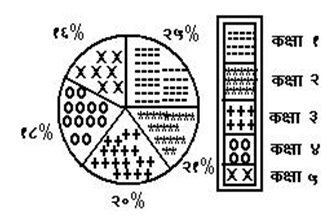
कक्षा १ मा कति विद्यार्थी रहेछन् ?
5. PAPER लाई STGW मा कोड गरिन्छ भने MOTHER लाई कुन कोड गरिन्छ ?
6. नेपालको संविधान २०७२ पालना गर्नु ......को कर्तव्य हुन्छ ?
7. Tick correct one out of following options.
8. चिनको भ्रमण गर्ने नेपालका प्रथम प्रधानमन्त्री को हुन ?
9. रामको आम्दानी रु. १२०० बाट बढेर रु. २००० मासिक पुगेछ । उसको तलब कति प्रतिशत बढेको होला?
10. भोटमा मुल भै वग्ने नदिमा नपर्ने नदि कुन हो ?
All Chapters
Section Officer Model Exam1
Section Officer Model Exam2
Section Officer Model Exam3
Section Officer Model Exam4
Section Officer Model Exam5
Section Officer Model Exam6
Section Officer Model Exam7
Section Officer Model Exam8
Section Officer Model Exam9
Section Officer Model Exam10
Section Officer Model Exam11
Section Officer Model Exam12
Section Officer Model Exam13
Section Officer Model Exam14
Section Officer Model Exam15
Section Officer Model Exam16
Section Officer Model Exam17
Section Officer Model Exam18
Section Officer Model Exam19
Section Officer Model Exam20
Section Officer Model Exam21
Section Officer Model Exam22
Section Officer Model Exam23
Section Officer Model Exam24
Section Officer Model Exam25
Section Officer Model Exam26
Section Officer Model Exam27
Section Officer Model Exam28
Section Officer Model Exam29
Section Officer Model Exam30
Section Officer Model Exam31
Section Officer Model Exam32
Section Officer Model Exam33
Section Officer Model Exam34
Section Officer Model Exam35
Section Officer Model Exam36
Section Officer Model Exam37
Section Officer Model Exam38
Section Officer Model Exam39
Section Officer Model Exam40
Section Officer Model Exam41
Section Officer Model Exam42
Section Officer Model Exam43
Section Officer Model Exam44
Section Officer Model Exam45
Section Officer Model Exam46
Section Officer Model Exam47
Section Officer Model Exam48
Section Officer Model Exam49
Section Officer Model Exam50
Section Officer Model Exam51
Section Officer Model Exam52
Section Officer Model Exam53
Section Officer Model Exam54
Section Officer Model Exam55
Section Officer Model Exam56
Section Officer Model Exam 57
Section Officer Model Exam 58
Section Officer Model Exam 59
Section Officer Model Exam 60
Topics
Section Officer Model exam
Nowadays millions of companies produce billions of products and role of advertising is quite obvious. Ads help consumers to find goods or services of ir needs. However, do our needs grow equally fast as number of products? Some market analysts insist modern commercials are not merely matchmakers of a product and a consumer, but actively interfere with buyer’s desires, developing artificial needs.
Undoubtedly, advertisement guides people through market, serves those who do not have time to learn differences between goods. These products are probably same, but loyalty to a particular brand, formed by a commercial helps make a choice. When a person buys one mobile phone out of 50 models, he thinks he made his choice himself. But that was a commercial who told him about features of this phone.
Neverless, ads not only inform us about new goods, but force people to want m. This can be even useful, for example for someone who suffers from back pains and without commercials he would never imagine re are new mattresses which could ease ir pains.
Unfortunately, promoters now operate our minds more aggressively. Commercials no longer promote products, but lifestyles. They told us to purchase things just because y are fashionable or up to date with image of successful person. And we buy new cars, gadgets and clos in order to match this image and not because old ones are no longer usable.
What has been concluded is that high sales of popular commodities are result of new promotional technologies. The best illustration of that is that everyone now is concerned mostly about how a new mobile phone will reflect his personality, a new shirt – his image, or will a new car make colleagues feel jealous.
The word 'matchmaker' in above passage means :
गाईको बाच्छो भएजस्तै हाँसको ?
नेपालमा पहिलो व्यक्तिका आधारमा जोडा मिलाउनुहोस ।
| a. निर्वाचन आयुक्त | १. अनिरुद्र प्रसाद सिंह |
| b. प्रधान | २. सुरेन्द्र वहादुर वस्नेत |
| c. लोक सेवा आयोगका अध्यक्ष | ३. चन्द्र वहादुर थापा |
| d. महालेखा परिक्षक | ४. हरि प्रसाद प्रधान |
एउटा विद्यालयमा ५०० जना विद्यार्थी छन् । विभिन्न कक्षामा भएका विद्यार्थीहरूलाई पाइचार्टमा प्रस्तुत गरिएको छ । पाइचार्टको अध्ययन गरी तलको प्रश्नको उत्तर दिनुहोस्
कक्षा १ मा कति विद्यार्थी रहेछन् ?
