 Guest
Guest
Chapter:
1. Aerofoil
Definition of Aerofoil
Aerofoil or airfoil is defined as the cross-sectional shape that is designed with curved surface giving it the most favourable ratio between lift and drag in flight. Lift is the component such that the force is perpendicular to the direction of motion and drag is the component parallel to the direction of motion. A similar idea is used in the designing of hydrofoils which is used when water is used as the working fluid.
The designing of the aerofoil depends on the aerodynamic characteristics which further depends on the weight, speed and the purpose of the aircraft. These are dependent on certain terms that need to be defined to understand the design.
2. principle behind an aerofoil
How it works
3. Advantages of carburator
advantages:
- Itā??s very simple in terms of its components, so thereā??s less things to breakdown.
- Itā??s cheaper to manufacture/replace
- Uses no electricity, so can be used in motorcycles with no battery (a magneto would be used for the ignition).
- Uses atmospheric pressure to move fuel that is stored in the bowl. SO if the carb is positioned under the tank, fuel will go to it by gravity, requiring no fuel pump.
- Has a distinct visual/sound that may be attractive to enthusiasts/collectors. Also, it can be easily serviced by most people.
4. Carburation system
A carburetor is a device that mixes air and fuel for internal combustion engines in the proper airā??fuel ratio for combustion.
Gasoline engines are designed to take in exactly the right amount of air so the fuel burns properly, whether the engine is starting from cold or running hot at top speed. Getting the fuel-air mixture just right is the job of a clever mechanical gadget called a carburetor: a tube that allows air and fuel into the engine through valves, mixing them together in different amounts to suit a wide range of different driving conditions.
5. Types of Aerofoils
Following are the types of aerofoils that are used:
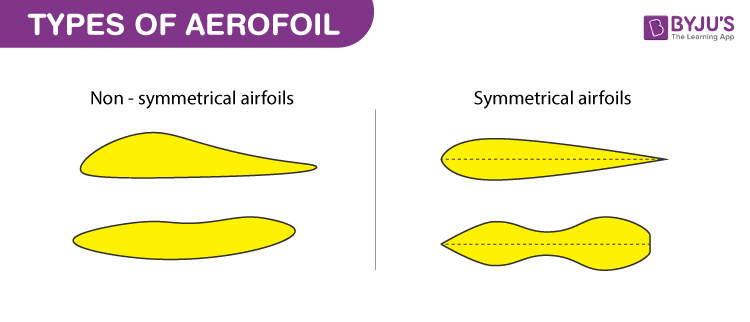
- Symmetrical aerofoil: This has identical upper and lower surfaces such that the chord line and mean camber line are the same producing no life at zero AOA. These find applications in most of the light helicopters in their main rotor blades.
- Non-symmetrical aerofoil: It is also known as a cambered aerofoil. This has different upper and lower surfaces such that the chord line is placed above with large curvature. These have different chord line and chamber line. The advantages of non-symmetrical aerofoil is that the lift to drag ratio and stall characteristics are better and useful lift is produced at zero AOA. The disadvantages are that they are not economical and there is a production of undesirable torque.
6. How does Carburators works ?
- Air flows into the top of the carburetor from the car's air intake, passing through a filter that cleans it of debris.
- When the engine is first started, the choke (blue) can be set so it almost blocks the top of the pipe to reduce the amount of air coming in (increasing the fuel content of the mixture entering the cylinders).
- In the center of the tube, the air is forced through a narrow kink called a venturi. This makes it speed up and causes its pressure to drop.
- The drop in air pressure creates suction on the fuel pipe (right), drawing in fuel (orange).
- The throttle (green) is a valve that swivels to open or close the pipe. When the throttle is open, more air and fuel flows to the cylinders so the engine produces more power and the car goes faster.
- The mixture of air and fuel flows down into the cylinders.
- Fuel (orange) is supplied from a mini-fuel tank called the float-feed chamber.
- As the fuel level falls, a float in the chamber falls and opens a valve at the top.
- When the valve opens, more fuel flows in to replenish the chamber from the main gas tank. This makes the float rise and close the valve again.
7. Explain summary of use and misuse of science.
The history of civilization shows how to choose between making the right and wrong use of the discoveries of science. In a very short period amazing discoveries have been made and applied to practical purposes. There have been more scientific discoveries in our own age than in any previous period of history. They have caused so many changes so quickly that it has been like a revolution. So, people say that they are living in an age of revolution.
In fact, Science is a great boon to mankind. Science has brought many advantages to mankind and improved life for people. It has helped to fight malnutrition, hunger and disease. It has lengthened life and has also increased its quality. Fields of knowledge, experience and recreation are now available to millions of people. Now we must accept the fact that science has done and is doing a lot for the welfare of our race.
But the gifts of modern science can be misused. The motor driven vehicle makes business easy and gives harmless enjoyment to many. But it can also kill many people. Similarly, the cinema is a means of instructions and recreations but it is also a channel of vulgarity and false values. The wireless (radio) can link the world together in the moment of time, but it can also be the instrument of spreading propaganda. Likewise, the airplane makes travel rapid and easy but it can also be used as weapon of destruction.
Now the question arises as to how far it is morally justifiable to make perfect discoveries and inventions which can be used for purpose of destruction. In other words, Scientists must think about whether it is morally right to create things that can do harm even though they can also do good. This was the question raised by Professor Hill. 'If we think it is wrong to achieve something good by first doing evil, then isn't it also wrong to achieve something good by a method that we know could be used later to cause evil?'
He discusses two problems in relations to this question. The first was taken from the development of nuclear physics. It has greatest value to mankind if used rightly. But at present the main object of the development of this science is to produce weapons such as the atomic and hydrogen bomb of the great destructive power. Is it right, therefore, to continue research on it? The other problem arises from the success of science in overcoming disease and lengthening life. Science has increased birth rate and life expectancy by controlling hunger and disease. But the supplies of world food are not increasing at the same rate. In this case, the world becomes divided into two groups: "Haves" and ā??Have-nots". The struggles to get food will lead to a situation where the rich and privileged will be able to obtain enough and the poor and powerless people will be unable to do so. People will fight wars to get possession of food resources. In the attempt to produce more food, the land will be overworked, erosion will take place and the soil will become like dust. So, is it right to continue improving world health and reducing mortality if it is evidently clear that by doing so future famine and disorder are sure? These types of question are really a great challenge to thoughtful men.
8. Disadvantages of Carburator
disadvantages:
- fuel metering is based on pressure differential and the fuel flow capacity of a duct. This is not a very precise means of metering, so the carburetor will almost never provide the best fuel ratio, so fuel consumption will be higher.
- Because of the lack of sophistication in fuel metering, thereā??s little room for adaptation in face of changing conditions like high altitude places, changes in air temperature/density, abrupt acceleration, etc.
- Fuel atomization may not be so good at times.
- Itā??s difficult to use with forced induction, because with turbos and superchargers the intake is pressurized and can ā??foolā? the carburetor.
